Information of Salta
An overview of what is there and what to do.
It is a province located in the northwest of Argentina. To the north it borders Jujuy (in the north and northwest), has an international border with Bolivia (in the north) and a small border with Paraguay (in the northeast). To the south it is surrounded by the provinces of Catamarca, Tucumán and Santiago del Estero, and to the east by Chaco and Formosa. To the west, it has an international border with Chile.
An outstanding characteristic is the diversity of reliefs and climates it possesses, which is why when visiting it you can find very varied landscapes:
- Puna: it is located in the west and corresponds to an arid and elevated plateau of the Andean mountain range. It is a sparsely populated area with several salt flats. It is common to observe Andean fauna such as vicunas (a native South American camelid).
- Western and Eastern Cordillera: these are mountain ranges with high peaks. In the Eastern Cordillera there are valleys and ravines such as the Quebrada del Toro, the Calchaquíes valleys and the Lerma valley.
- Yungas: they are located on the eastern slopes of the sub-Andean sierras, within the eastern sector of the province. They are presented as mountainous rainforests. They are characterised by their great biodiversity and are an excellent place for those interested in wildlife watching.
- Chaco Salteño: it occupies the east and corresponds to a plain with vegetation of the Chaco type. It is a sub-region of the so-called Gran Chaco.
This geographical variety is reflected in the diversity of tourist destinations offered by its territory:
- San Antonio de los Cobres: there is the station where the unmissable Tren a las Nubes (Train to the Clouds) departs from (you can hire an excursion from the city of Salta). You can take a trip up to the La Polvorilla viaduct, which at 4,536 metres above sea level is the fourth highest railway in the world in terms of height.
- City of Salta: it is the capital and largest population of the province. It has a network of museums to see, and a visit to the Cerro San Bernardo (a Hill), which can be reached by cable car, is a must.
- Cafayate: a popular destination for tourists. From there, taking the National Route 68, you can go through the Quebrada de las Conchas, where you can appreciate landscapes of reddish colours and geoforms.
- Los Cardones National Park: a protected natural area with options to go on tours and observe its attractions, among which we can highlight extensions with cardons, some of them of great size.
- Iruya: a unique locality due to its original aspect, located on the side of a mountain.
- El Rey National Park: it is located in the Yungas. It has a variety of trails to walk through it and it is a good place to see wildlife such as mammals.
Regarding gastronomy, typical dishes are the empanadas salteñas, humitas and locro. The so called "peñas" are common, where you can have dinner while enjoying live regional music.
To get to the province of Salta:
a) By car: there are different paved routes that connect it from different points of Argentina:
- National Route 9: it communicates to the north with Jujuy passing through San Salvador de Jujuy up to La Quiaca, and to the south with provinces and cities such as San Miguel de Tucumán, Córdoba, Rosario and even up to the capital city of Buenos Aires.
- National Route 40: it is a scenic road that runs through the west of the country and allows access to impressive tourist sites. It extends from the extreme north through the Puna of Jujuy, crosses different provinces and ends in the south of Argentina in the province of Santa Cruz.
- There are other national routes, such as the 81 that connects with Formosa, the 34 that joins it with Santiago del Estero and Santa Fe, and the 16 with Chaco.
b) By plane: daily flights arrive at the Martín Miguel de Güemes International Airport from the city of Buenos Aires. It is also common to find flights from other destinations, although it is necessary to check if they are operating and their frequency, such as Córdoba, Mendoza, Neuquén and others.
Regarding when to visit Salta, it is advisable to go in spring, autumn and taking a coat in winter. As we get closer to the middle of the year (winter) the weather tends to be drier, sunny and the temperature drops, getting very cold especially in the higher areas. On the other hand, summer is the wet season and there are places where it can rain a lot, and it can even happen that the accesses can be complicated by floods.

 page of Argentina
 destinations of Argentina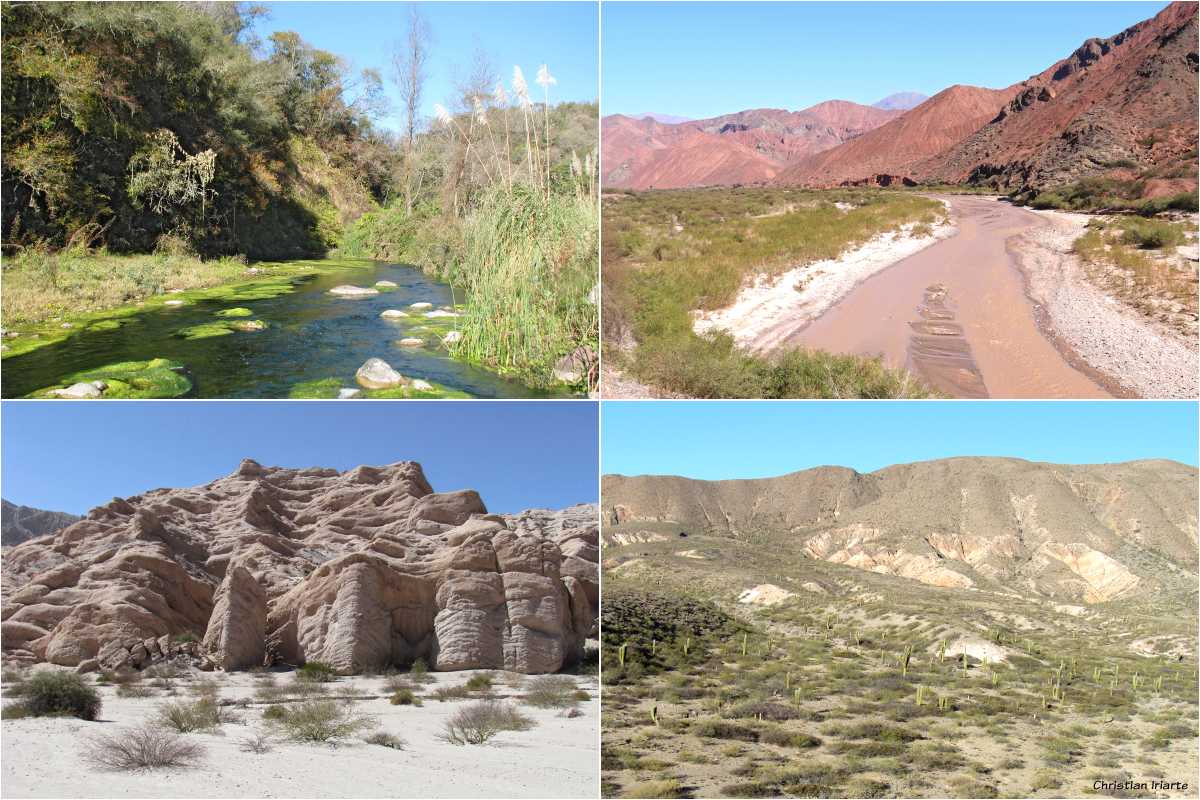
 to view places